Let’s be honest — a lot of “natural cleaning” advice online is useless. Vague tips like “use vinegar” without any actual ratios, or recipes that smell nice but don’t actually cut through grease. I’ve tested a fair number of these over the years, and this guide only includes natural cleaning products and DIY mixes that genuinely hold up against real household grime, not just Pinterest-worthy photos. If you’ve been putting off switching from harsh chemical cleaners because you assumed natural options wouldn’t work as well, I get it — I was skeptical too. Turns out some of them work better than the stuff sitting under your sink right now.
Do Natural Cleaning Products Actually Work as Well as Chemical Ones?
Natural cleaning products hold up well for most everyday cleaning — degreasing, disinfecting surfaces, removing hard water stains, and general grime. Where they genuinely fall short is heavy-duty disinfection (like after illness) and stubborn mold, where you may still need something stronger occasionally.
I’ll be upfront about this, because a lot of blogs oversell natural cleaning as a universal replacement, and that’s just not honest. For daily kitchen counters, bathroom sinks, and general surfaces, natural options work just fine. For genuinely killing certain bacteria and viruses to hospital-grade standards, you need EPA-registered disinfectants — vinegar isn’t going to cut it there.
That said, for probably 90% of what an average household actually cleans day to day, natural products do the job. And they cost noticeably less over time, plus they’re a lot gentler on skin if you’re the one doing the scrubbing.
The Core Ingredients Behind Effective Natural Cleaning Products
Most homemade natural cleaning products are built from a small handful of ingredients, used in different combinations depending on the job.
- White vinegar — cuts through grease, dissolves mineral deposits, and works as a mild disinfectant. The smell fades within an hour or so once dry
- Baking soda — mild abrasive, great for scrubbing without scratching, also neutralizes odors
- Castile soap — a plant-based soap concentrate; a little goes a long way, and it works for nearly everything from dishes to floors
- Lemon juice — natural degreaser and stain-lifter, particularly good on brass and copper
- Salt — adds mild abrasive scrubbing power when combined with other ingredients
- Essential oils (tea tree, eucalyptus, lemon) — some have mild antibacterial properties, but honestly their bigger role is just making things smell decent
One thing worth knowing upfront: never mix vinegar with bleach, or baking soda with bleach. It sounds obvious, but people do it accidentally, and the fumes can be genuinely dangerous. Stick to natural-only combinations, and don’t cross-contaminate with chemical cleaners in the same session.
DIY All-Purpose Cleaner Recipe
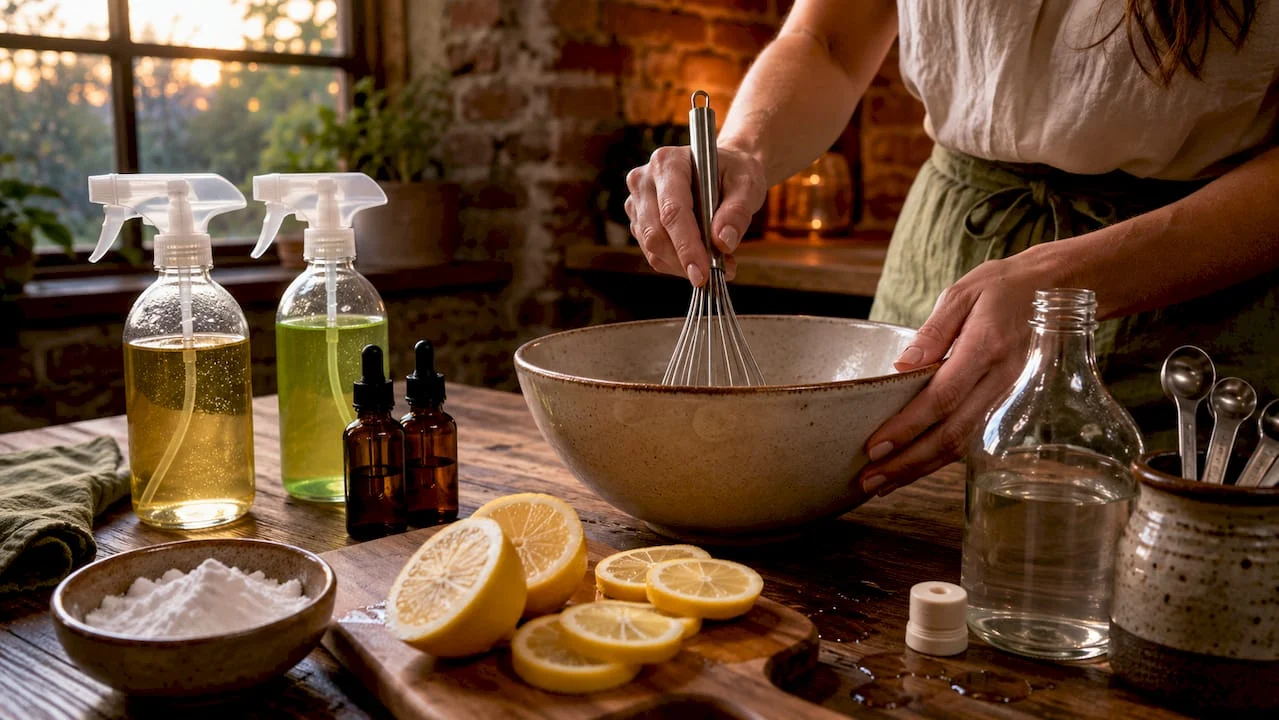
Direct answer: A basic all-purpose natural cleaner needs just 1 cup white vinegar, 1 cup water, and 10-15 drops of essential oil in a spray bottle — effective on most kitchen and bathroom surfaces, though it should be avoided on natural stone.
Ingredients
- 1 cup white vinegar
- 1 cup water
- 10-15 drops essential oil (lemon or tea tree work well)
- Spray bottle (reused ones work fine)
Instructions
- Combine vinegar and water in the spray bottle
- Add essential oil drops
- Shake before each use — the oil separates over time
- Spray on counters, stovetops, or bathroom surfaces and wipe
I keep one of these under my kitchen sink permanently now. It handles daily spills and counter wipe-downs without me thinking twice, and a batch costs maybe Rs. 15-20 to make versus Rs. 150+ for a branded spray.
One caution: don’t use vinegar-based cleaners on granite, marble, or other natural stone countertops. The acidity etches the surface over time — I learned this the hard way on a friend’s kitchen counter, and it wasn’t pretty.
DIY Bathroom and Grout Cleaner
Bathroom grime is where most people give up on natural cleaning too early, assuming it just won’t work on tough buildup. It does — it just needs a slightly different approach than spray-and-wipe.
Baking Soda Grout Paste
- 3 parts baking soda
- 1 part water
- Mix into a thick paste, apply directly to grout lines with an old toothbrush
- Let sit 10-15 minutes, then scrub and rinse
Showerhead Descaler
- Fill a plastic bag with white vinegar
- Secure it around the showerhead with a rubber band, fully submerging the nozzle
- Leave for 1 hour (longer for heavy buildup, common with hard water)
- Remove, run hot water through for a minute
Has your showerhead ever gone from a strong stream to a sad trickle over a few months? That’s mineral buildup, and this trick fixes it without buying a new fixture.
[link to related deep cleaning checklist guide here]
DIY Glass and Mirror Cleaner
Store-bought glass cleaners are honestly one of the easiest things to replace, and the homemade version streaks less in my experience, not more.
- 2 cups water
- 1/4 cup white vinegar
- 1/4 cup rubbing alcohol (optional, but helps with faster drying and less streaking)
- A few drops of dish soap, if surfaces are particularly greasy
Mix in a spray bottle, spray lightly, and wipe with newspaper or a microfiber cloth rather than paper towels — paper towels tend to leave lint behind, which oddly enough makes glass look dirtier, not cleaner.
DIY Floor Cleaner for Different Surfaces
Different flooring needs different treatment, and using the wrong natural mix can actually cause damage.
For Tile and Vinyl
- 1/2 cup vinegar
- 1 gallon warm water
- A few drops of castile soap
- Mop as usual; no rinsing required
For Wooden Floors
- 1/4 cup vinegar (diluted more than tile, since wood is more sensitive)
- 1 gallon warm water
- Damp mop only — never soak wooden floors, which can cause warping over time
For Natural Stone (marble, granite)
Skip vinegar entirely here. Use warm water with a small amount of pH-neutral castile soap instead — acidic cleaners will dull and etch stone surfaces over repeated use.
Natural Odor Removers and Air Fresheners
Chemical air fresheners mostly mask smells rather than actually dealing with them, which always bothered me a bit.
- Baking soda bowls placed in the fridge, shoe cabinets, or bathroom absorb odors genuinely well, not just cover them up
- Simmer pot: a pot of water with lemon slices, cinnamon sticks, and cloves, simmered on low — fills the house with a natural scent for hours
- Activated charcoal bags in closets or cars, particularly effective against musty smells
- Essential oil diffuser with a few drops of your preferred scent, refreshed every few days
Picture a small business owner in Jaipur running a home bakery — she switched from a chemical air freshener to a cinnamon-clove simmer pot during customer visits, and multiple people commented it made the whole house feel warmer, not just “cleaner.” Small change, noticeable difference.
Frequently Asked Questions
Are natural cleaning products safe around pets and children? Generally yes, more so than most chemical cleaners, though pure essential oils should still be kept out of reach and diluted properly — some, like tea tree oil, can be irritating in concentrated form, especially around cats.
How long do DIY natural cleaning products last before they go bad? Vinegar-based sprays typically stay effective for 1-2 months if stored in a cool, dark spot. Anything with essential oils may lose potency a bit faster, so smaller batches made more often work better than one giant bottle.
Can I use natural cleaning products on all surfaces? Not quite all — avoid vinegar-based cleaners on natural stone, cast iron, and some hardwood finishes, since the acidity can cause damage over repeated use. Always test a small hidden spot first if you’re unsure.
Do natural cleaning products actually disinfect, or just clean? Vinegar and certain essential oils have some antibacterial properties, but they’re not registered disinfectants in the way bleach or alcohol-based products are. For everyday cleaning they’re fine; after illness in the house, you may want something stronger.
Is it cheaper to make natural cleaning products at home? Substantially, yes. A homemade all-purpose spray costs a fraction of a branded bottle, and ingredients like vinegar and baking soda go a long way — one bottle of vinegar can make several batches of cleaner.
What’s the biggest mistake people make with DIY natural cleaners? Mixing incompatible ingredients, particularly anything with bleach, which can create dangerous fumes. Stick to vinegar, baking soda, castile soap, and essential oils in their own separate combinations, and never introduce bleach into the mix.
Conclusion
Natural cleaning products aren’t some watered-down compromise — for most everyday cleaning, they genuinely hold their own against chemical alternatives, and they cost less while being a lot gentler to use regularly. Start with the all-purpose spray, since it covers the most ground, then build out from there as specific needs come up around your home.
Try making just one of these recipes this week — the all-purpose spray takes two minutes — and see how it handles your actual daily mess before committing to switching everything over at once.