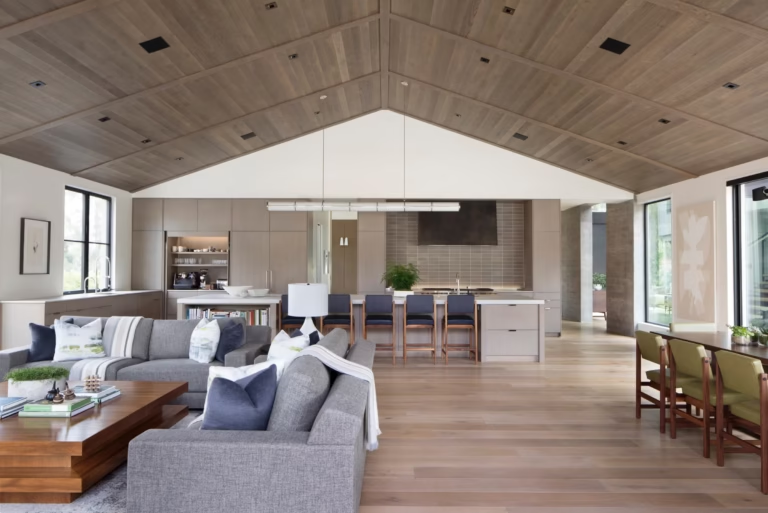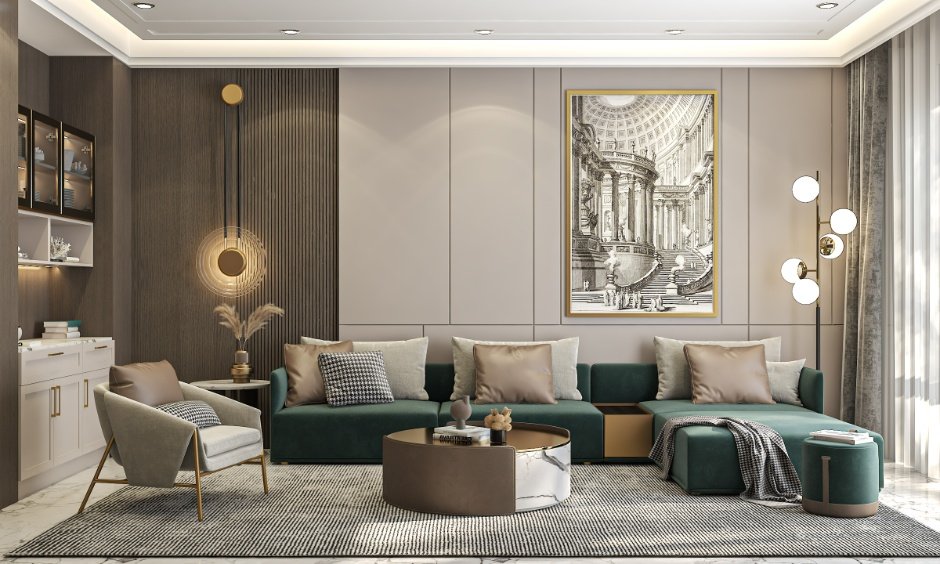
Walk into any newly built apartment in Bengaluru or Pune right now, and you’ll notice something. The living rooms don’t look like they did five years ago. Fewer showpieces. Less clutter. More breathing room. That shift is exactly what’s driving the modern home design trends 2026 conversation — and honestly, some of it is overdue.
I’ve spent the last few months visiting client homes and sitting through more design consultations than I can count, and a pattern keeps showing up. People aren’t chasing “trendy” anymore. They want spaces that feel calm, work harder, and don’t need replacing every three years. That’s the real story behind modern home design trends 2026 — less about aesthetics, more about how a home actually functions.
Let’s get into what’s genuinely changing, and what’s just noise.
1. Quiet Luxury Is Replacing “Showroom” Interiors
Featured snippet: Quiet luxury in home design means fewer statement pieces and more focus on material quality — think solid wood, honest stone, and tactile fabrics — over flashy finishes that scream for attention. It’s understated, but it costs real money to get right.
For years, the goal was to make a room look like a furniture showroom. Glossy laminates, mirror work, a chandelier in every hallway. That’s fading.
What’s replacing it? Materials that feel good, not just look good. Solid wood over veneer. Limewash walls instead of glossy paint. Handloom textiles rather than printed polyester. It costs more upfront — a decent limewash finish can run ₹80-120 per square foot compared to ₹25-30 for standard paint — but it ages beautifully instead of looking tired after two monsoons.
I’ll be honest, I was skeptical of this trend at first. It sounded like an excuse to charge more for “less.” But after seeing a client’s home two years post-renovation, the quiet luxury pieces still looked intentional. The trendy stuff from the same era? Already dated.
2. Biophilic Design Goes Beyond a Few Potted Plants
Everyone’s heard “add more plants” by now. That’s not what biophilic design actually means in 2026.
It’s about designing the whole layout around natural light and airflow — not bolting nature on as decoration afterward. Think:
- Larger windows or French doors where structurally possible
- Courtyard-style layouts in independent houses (a nod to old Rajasthani havelis, actually)
- Living walls in balconies instead of scattered planters
- Natural ventilation planning so ACs run less
Picture a small business owner in Jaipur renovating an old haveli-style home. Instead of sealing up the central courtyard for extra room, more owners are now opening it back up — adding a skylight, some seating, a few climbers on the wall. It cuts the cooling load noticeably and the space just feels different to sit in.
3. Multi-Functional Rooms Are No Longer Optional
Featured snippet: Multi-functional room design in 2026 means spaces built to serve two or three purposes from day one — a guest room that’s also a home office, a dining nook that converts to a workspace — rather than converting rooms as an afterthought.
Post-pandemic work habits stuck around. Nobody’s shocked by that anymore. But what has changed is how homes get planned from the start.
Builders and designers are now sketching flexibility into floor plans before construction even begins. A spare bedroom gets a murphy bed and a built-in desk. A dining table doubles as a workstation with better task lighting overhead. It’s not glamorous, but it’s practical — and honestly, that’s what most Indian homeowners actually want anyway.
Has your home office ever eaten into your dining table space and just… stayed there? You’re not alone.
4. Warm Minimalism Over Stark White Boxes
Pure white, all-glass minimalism had its moment. It’s cooling off, and I don’t think that’s a bad thing.
What’s taking its place is warmer — terracotta tones, warm beige, muted greens, mixed with natural textures like jute and cane. It still feels clean and uncluttered, but it doesn’t feel clinical.
This matters especially in Indian homes where stark white shows dust and scuffs fast, particularly in cities with heavy pollution. A warm off-white or greige base hides wear far better while still looking current.
5. Smart Home Tech, But Simplified
A few years back, “smart home” meant a dozen disconnected apps and a hub nobody understood. That’s finally getting fixed.
Modern home design trends 2026 show a clear shift toward simplified, voice-and-app-integrated systems — lighting, security, and climate control on one platform instead of five. Matter-compatible devices are making this easier since they work across ecosystems without brand lock-in.
[link to related guide on smart home upgrades here]
Practical additions worth the money in 2026:
- Motion-sensor lighting in passages and bathrooms (cuts electricity bills more than people expect)
- App-controlled geysers, useful for winter mornings in North India
- Video doorbells — increasingly common in gated communities and standalone houses alike
6. Curved Furniture and Softer Architectural Lines
Sharp, boxy furniture is giving way to curves — rounded sofa arms, arched doorways, oval dining tables. It’s a small shift, but it changes how a room feels to move through.
I’ll admit this one straddles the line between trend and fad. Curved furniture can be pricier and harder to source locally, so I’d suggest picking one or two statement pieces — an arched mirror, a rounded coffee table — rather than redoing an entire room around it.
7. Sustainable and Locally Sourced Materials
Featured snippet: Sustainable home design in 2026 prioritizes locally sourced, low-impact materials — reclaimed wood, bamboo, fly-ash bricks, and regional stone — which cut both transport costs and environmental impact compared to imported alternatives.
This isn’t just an eco-trend anymore; it’s becoming cost-sensible too. Fly-ash bricks, for instance, run cheaper than red clay bricks in most states now, and they insulate better against heat.
Reclaimed wood furniture, once a niche choice, is showing up in mainstream stores. A reclaimed teak dining table might cost ₹45,000-70,000 depending on size — comparable to new teak, but with more character and a smaller footprint.
8. Zoning Within Open Floor Plans
Open floor plans aren’t going away, but the “one giant open box” version is being refined. Designers are using rugs, low partitions, level changes, and lighting to create defined zones without walling anything off.
A single large living-dining space might now have:
- A rug anchoring the seating area
- A pendant light marking the dining zone
- A half-height shelf unit separating a reading nook
It keeps the openness people want while avoiding that slightly awkward, undefined feeling a fully open room can have.
FAQ: Modern Home Design Trends 2026
Is quiet luxury the same as minimalism? Not quite. Minimalism is about having less stuff. Quiet luxury is about what you do have being genuinely well-made. You can have a minimalist room that’s still quiet luxury, or a fuller room that qualifies too — it’s about material quality, not quantity.
What’s the most budget-friendly trend to try first? Warm minimalism, honestly. Repainting walls in a warmer tone and swapping a few accessories costs far less than structural changes like courtyard remodeling or curved furniture.
Are these trends practical for rental apartments? Mostly yes. Lighting changes, furniture choices, textiles, and even removable wallpaper work fine in rentals. Structural biophilic changes obviously need ownership or landlord approval.
Do smart home upgrades actually save money long-term? Motion sensors and app-controlled appliances can meaningfully cut electricity use over a year, especially in larger homes. The upfront cost pays back gradually, not instantly — so it depends on how long you plan to stay.
Is curved furniture more expensive than standard pieces? Generally yes, by maybe 15-25%, mainly because it’s harder to manufacture and less commonly stocked locally. Custom orders push the price up further.
Will these trends still be relevant in a few years? Some will stick — sustainable materials and multi-functional rooms address real, ongoing needs. Others, like curved furniture, may fade faster since they’re more aesthetic than functional. [link to related guide on timeless vs trendy design choices here]
Final Thoughts
If there’s one takeaway from all this, it’s that modern home design trends 2026 are less about chasing looks and more about homes that actually work for how people live now. Quiet luxury, biophilic layouts, multi-functional rooms — none of these are fads you’ll regret in two years.
Don’t feel pressure to redo your whole house at once. Pick one or two trends that solve an actual problem in your home — maybe it’s better lighting, maybe it’s a room that finally pulls double duty — and start there. [link to related guide on budget home improvement ideas here] Small, deliberate changes tend to age a lot better than a full trend-driven overhaul anyway.